
Context
Their storefront was built for consumers. What they needed was a second front door: a place where a retailer could understand the partnership, request wholesale pricing, and get in touch — without the retail experience losing an ounce of its simplicity.
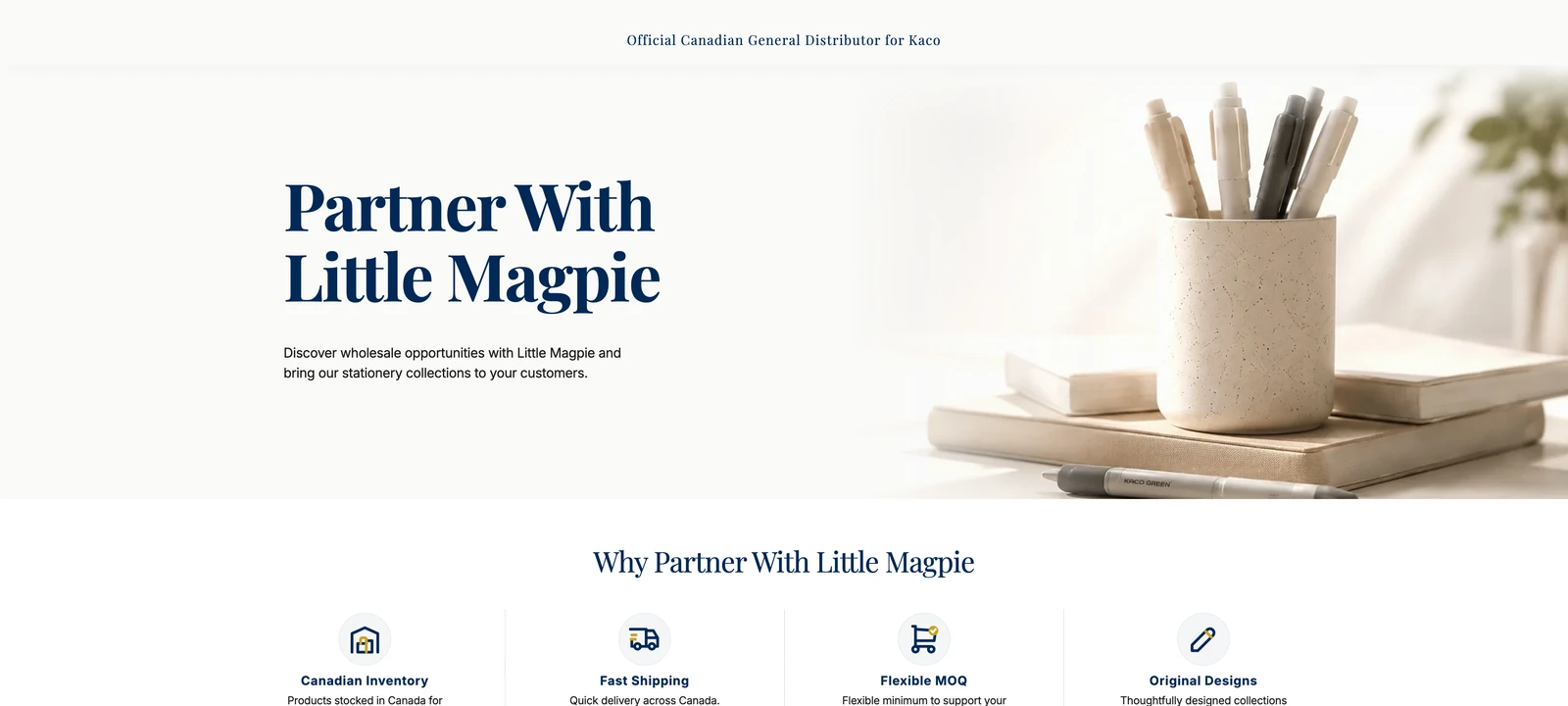
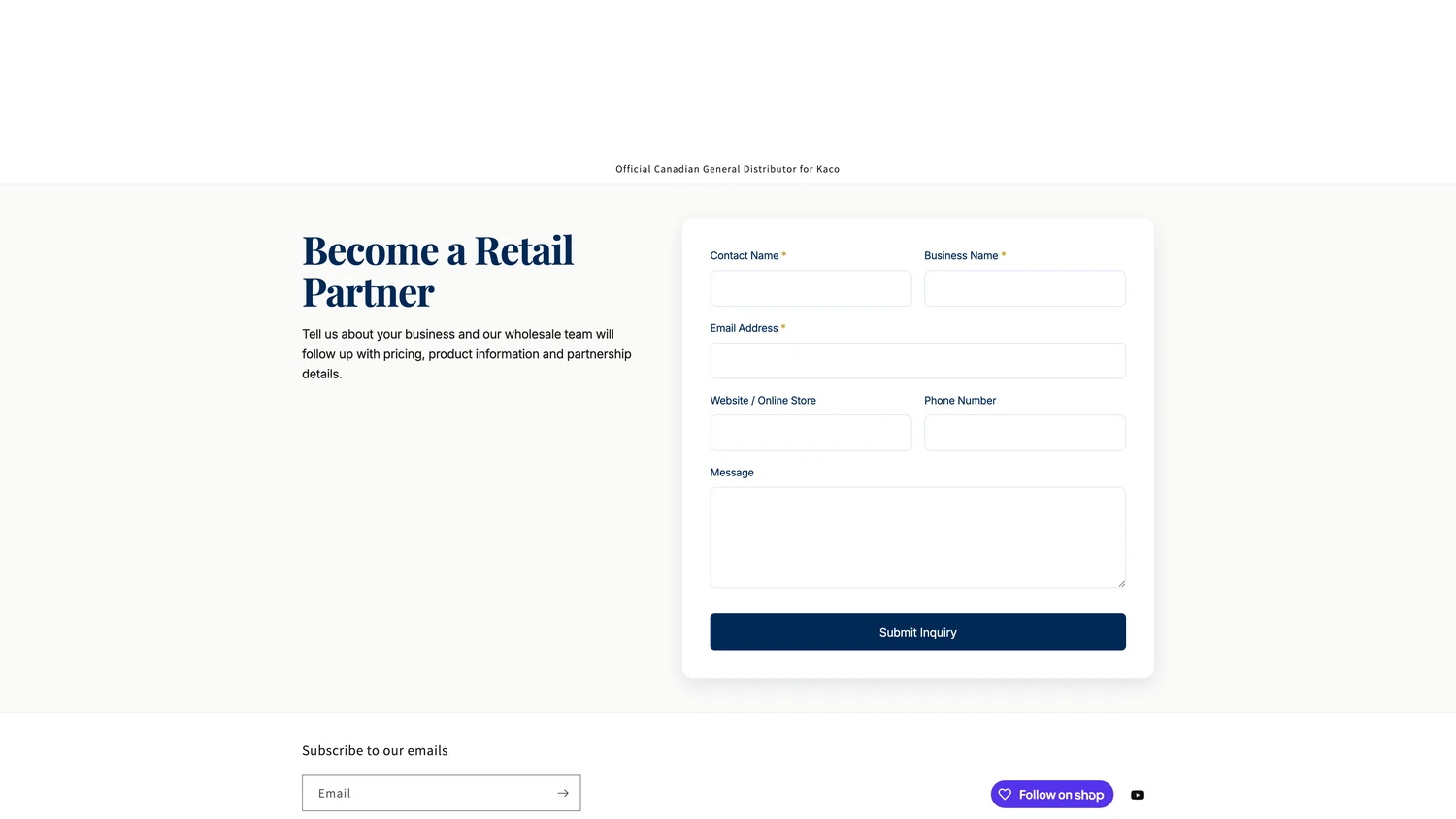
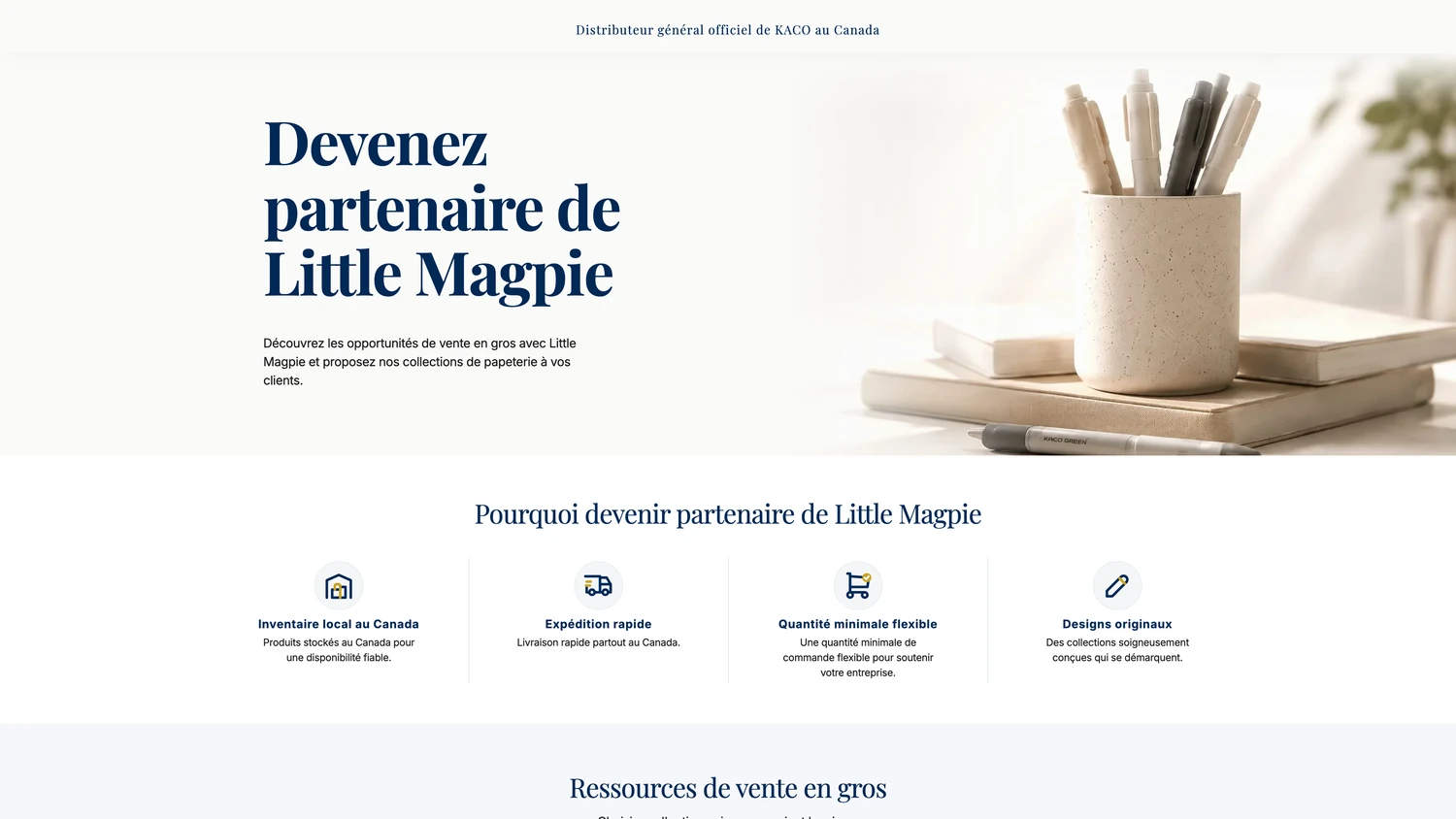
We designed and built that channel end to end, in English and French, on top of their existing theme — and shipped it on a duplicate so the live store stayed untouched until the day it launched.
- Wholesale landing page design & development
- Dedicated wholesale inquiry form
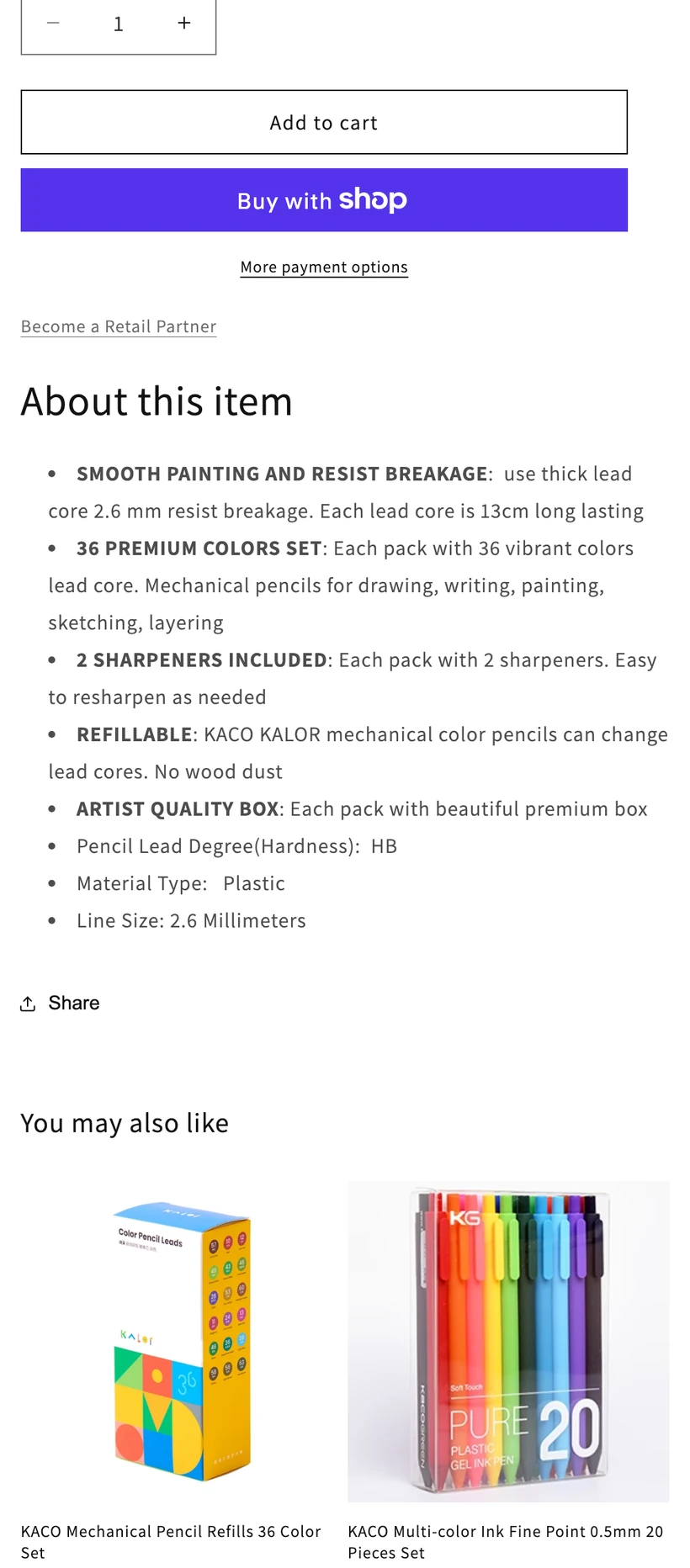
- Retail-side entry points that never interrupt shopping
- Bilingual English & French experience
- Scoped brand type system on Shopify
- Fully editable from the Shopify admin


A Wholesale Front Door, Built Into a Retail Store
Little Magpie sells to consumers and to retailers from the same Shopify store. The brief was to serve both without letting either get in the way of the other.
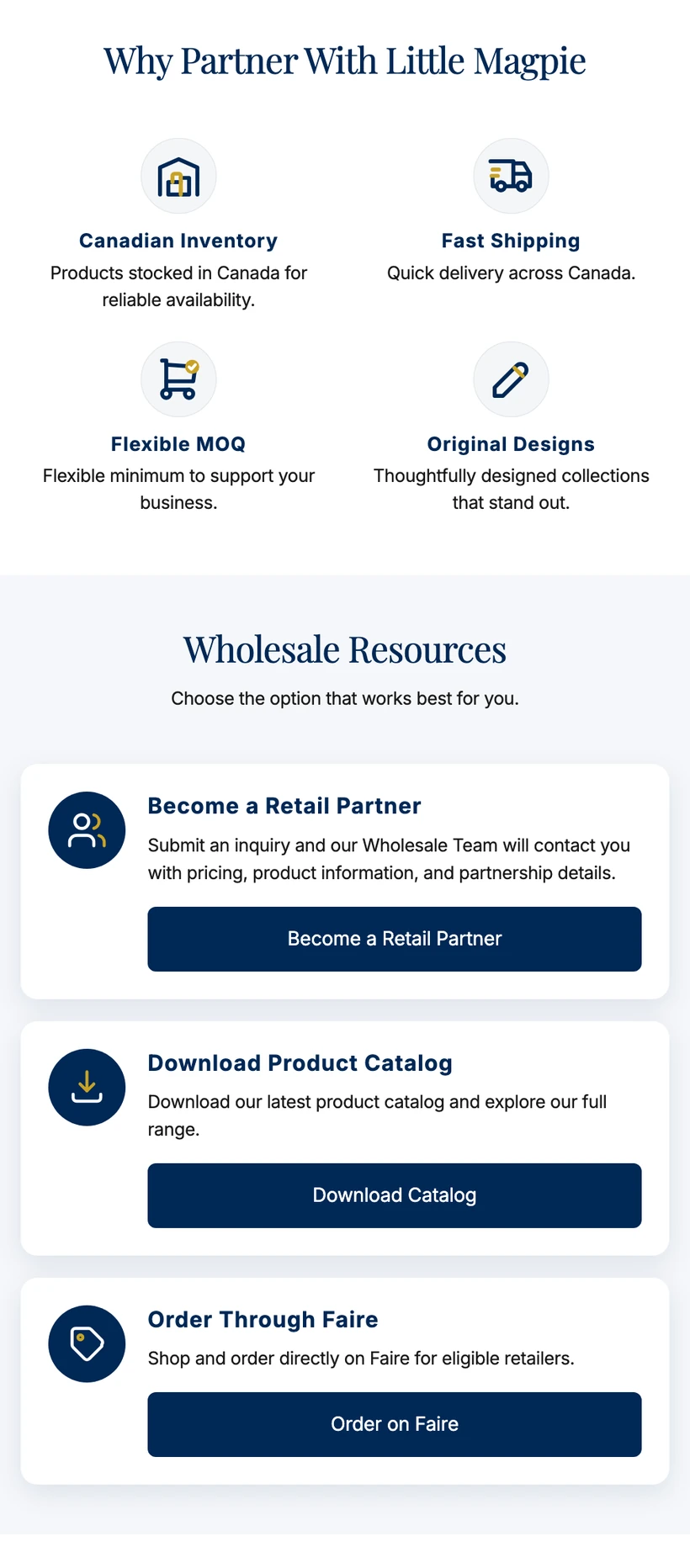
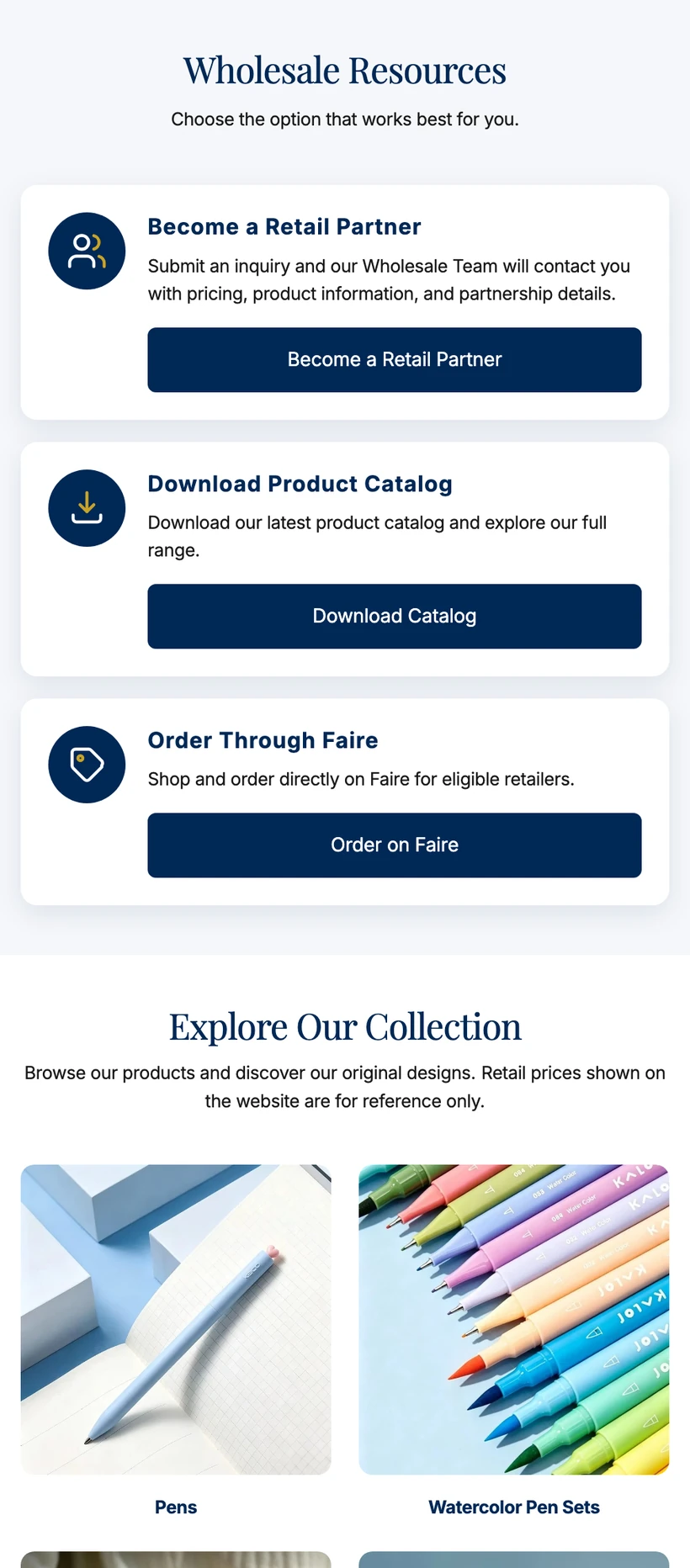
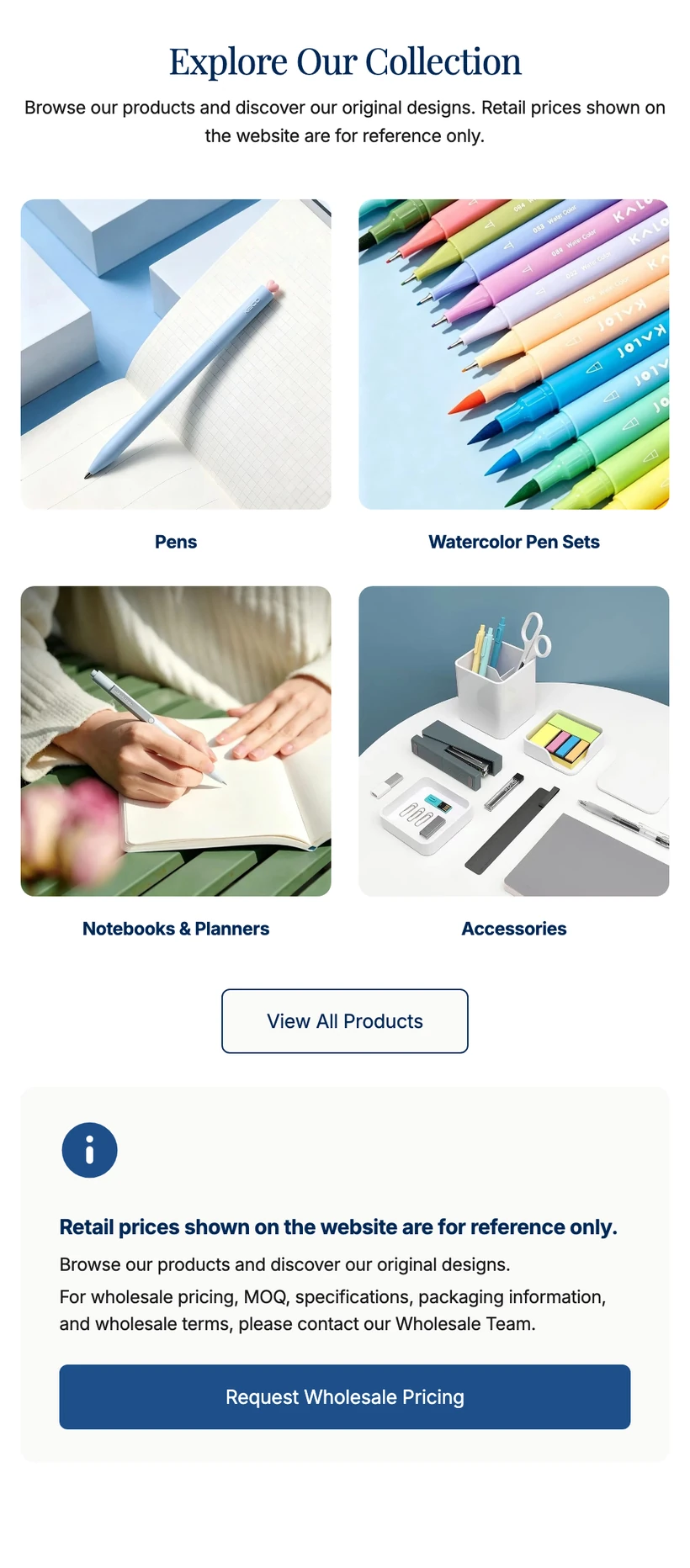
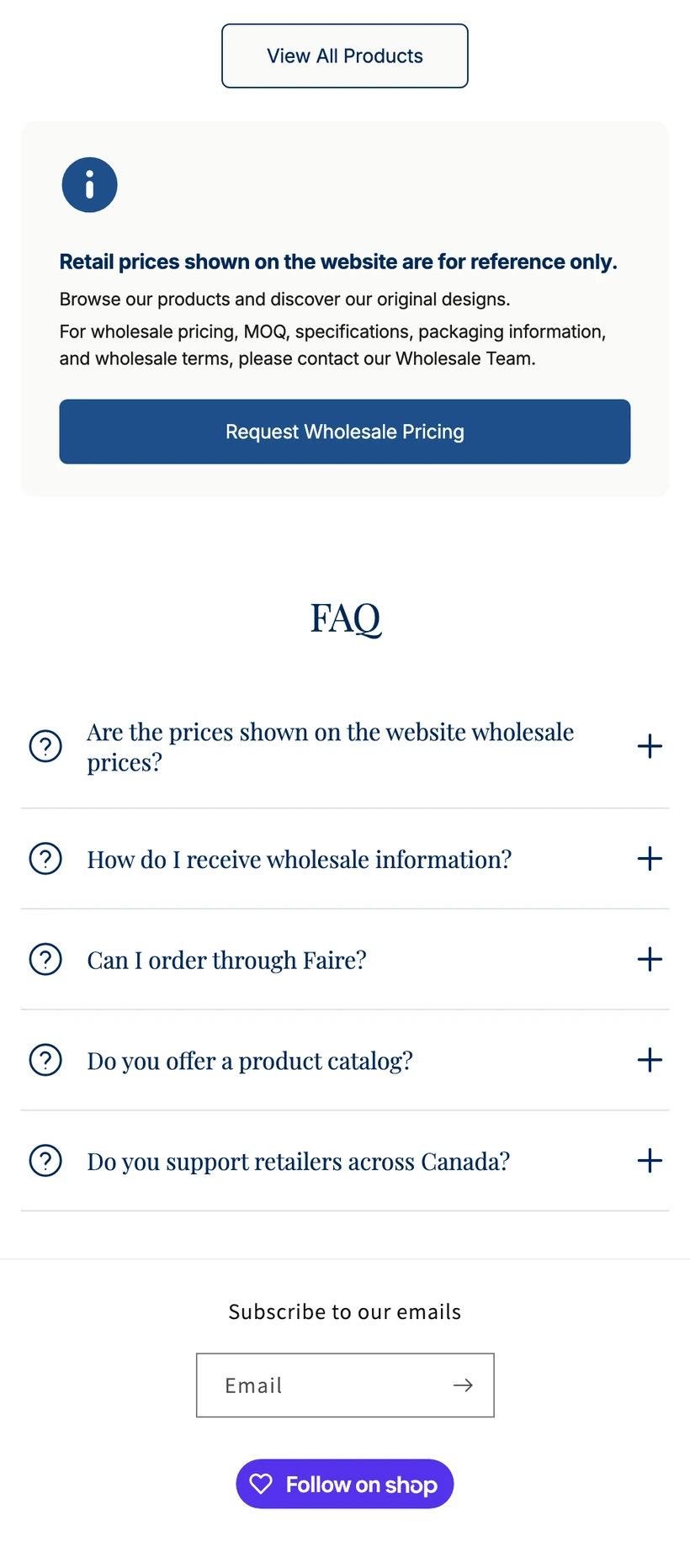
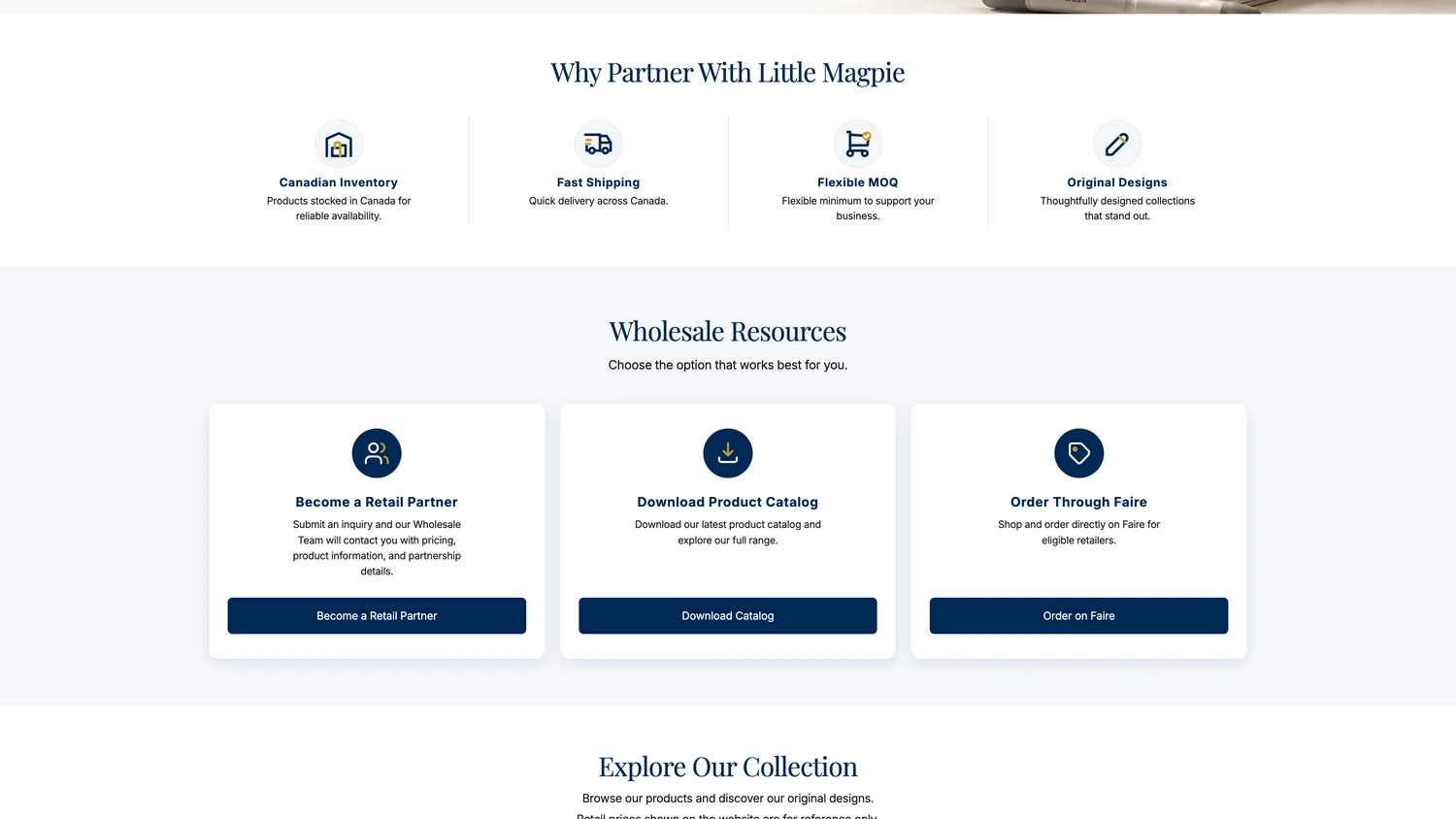
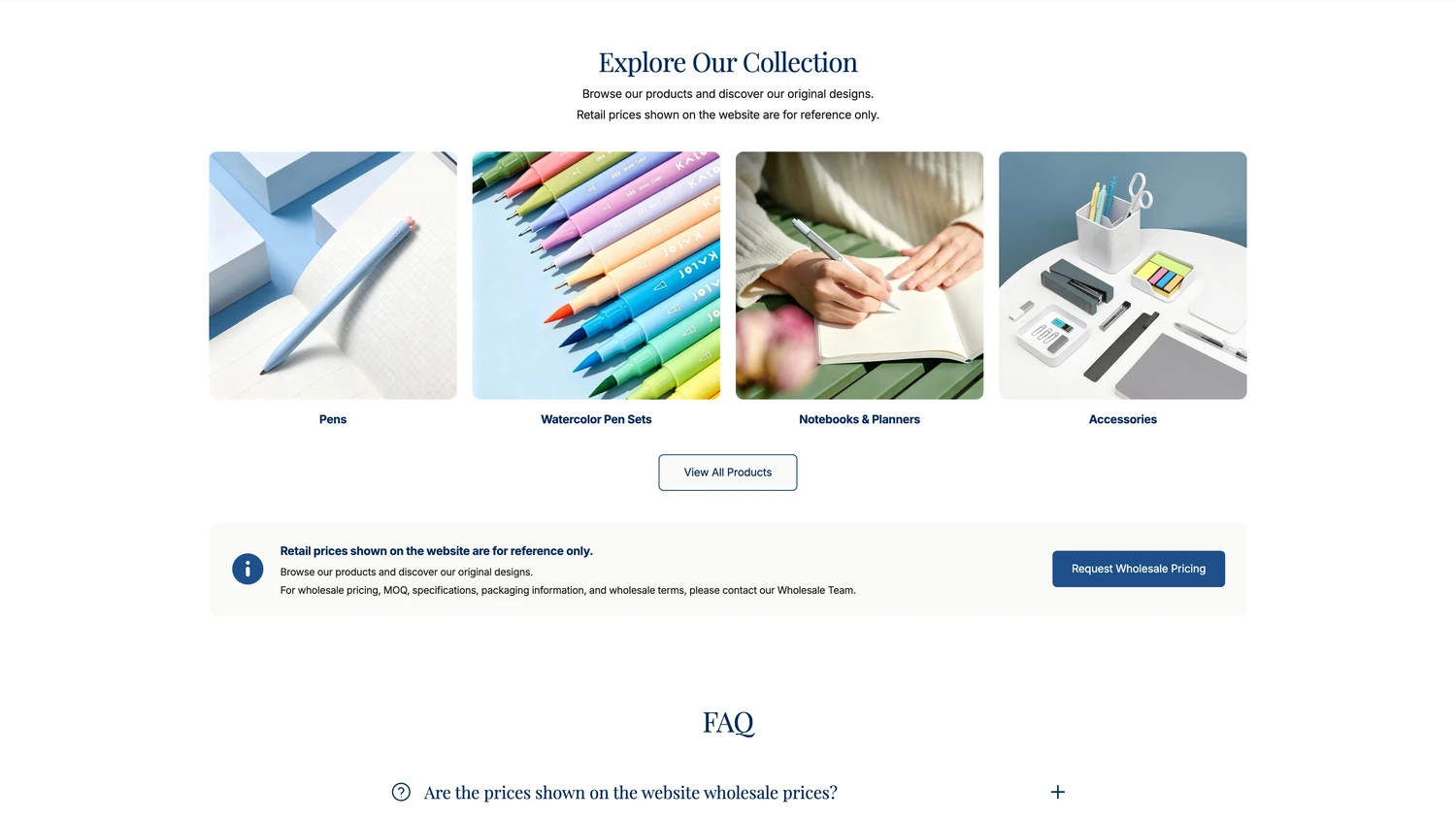
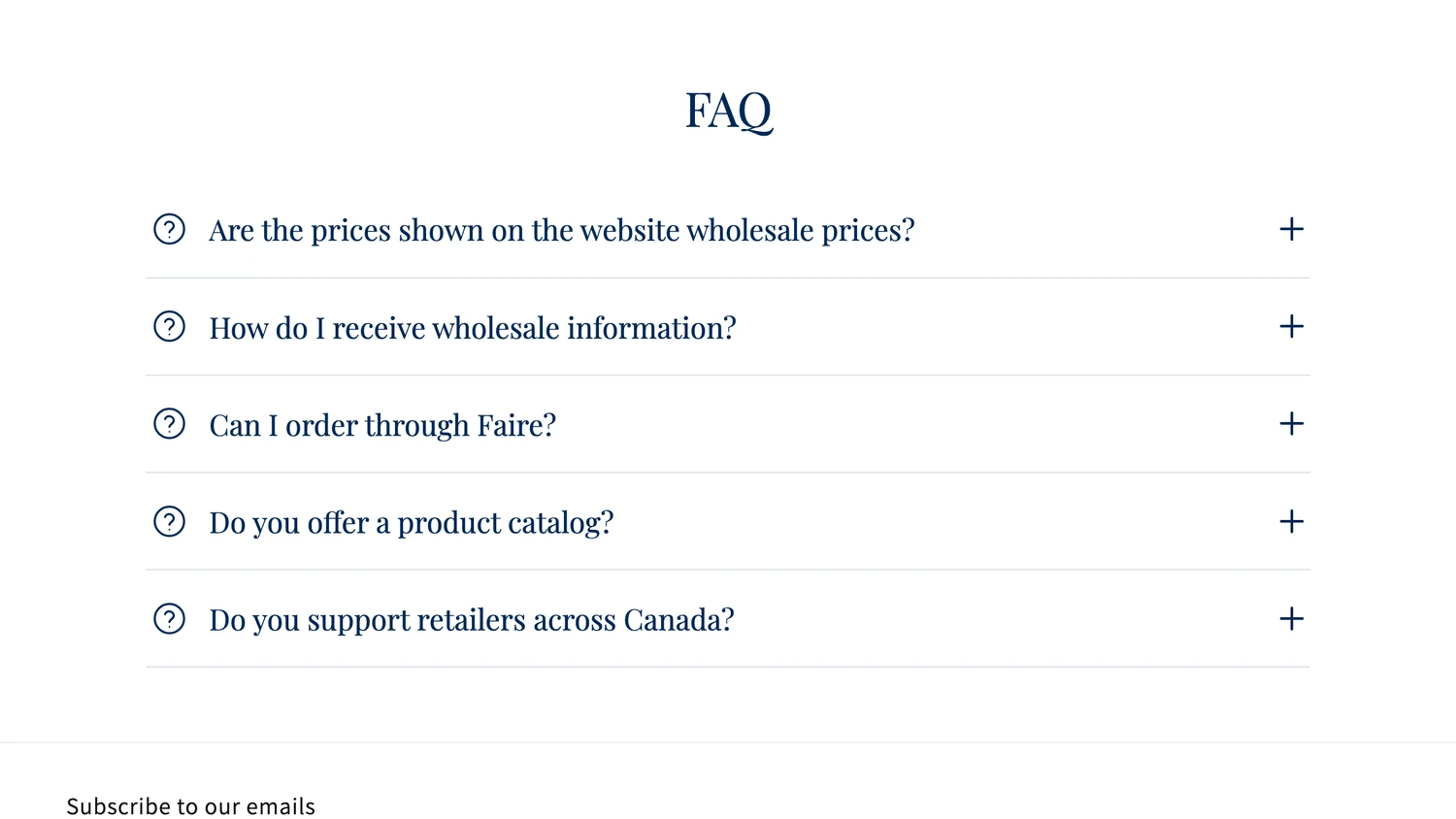
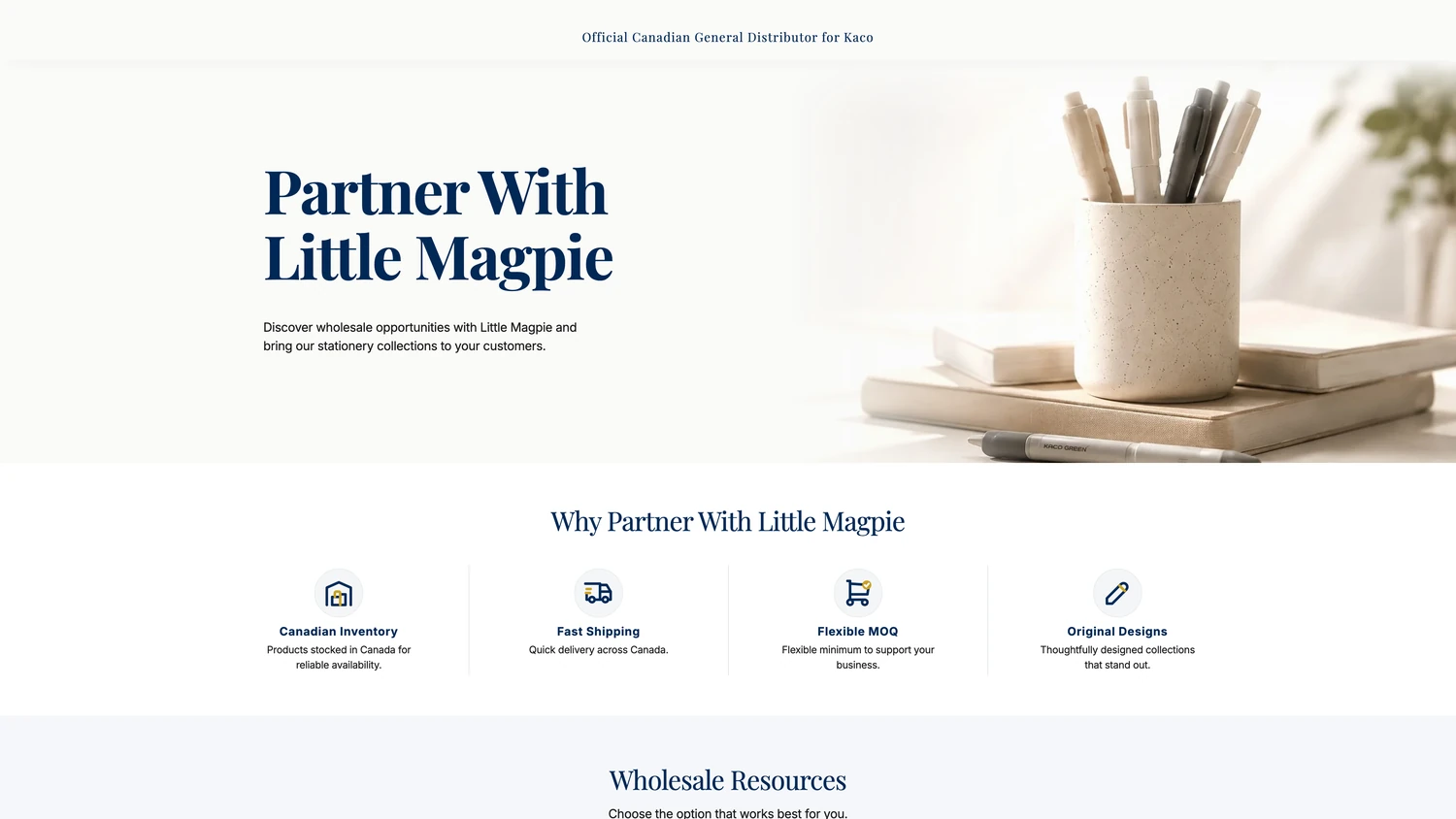
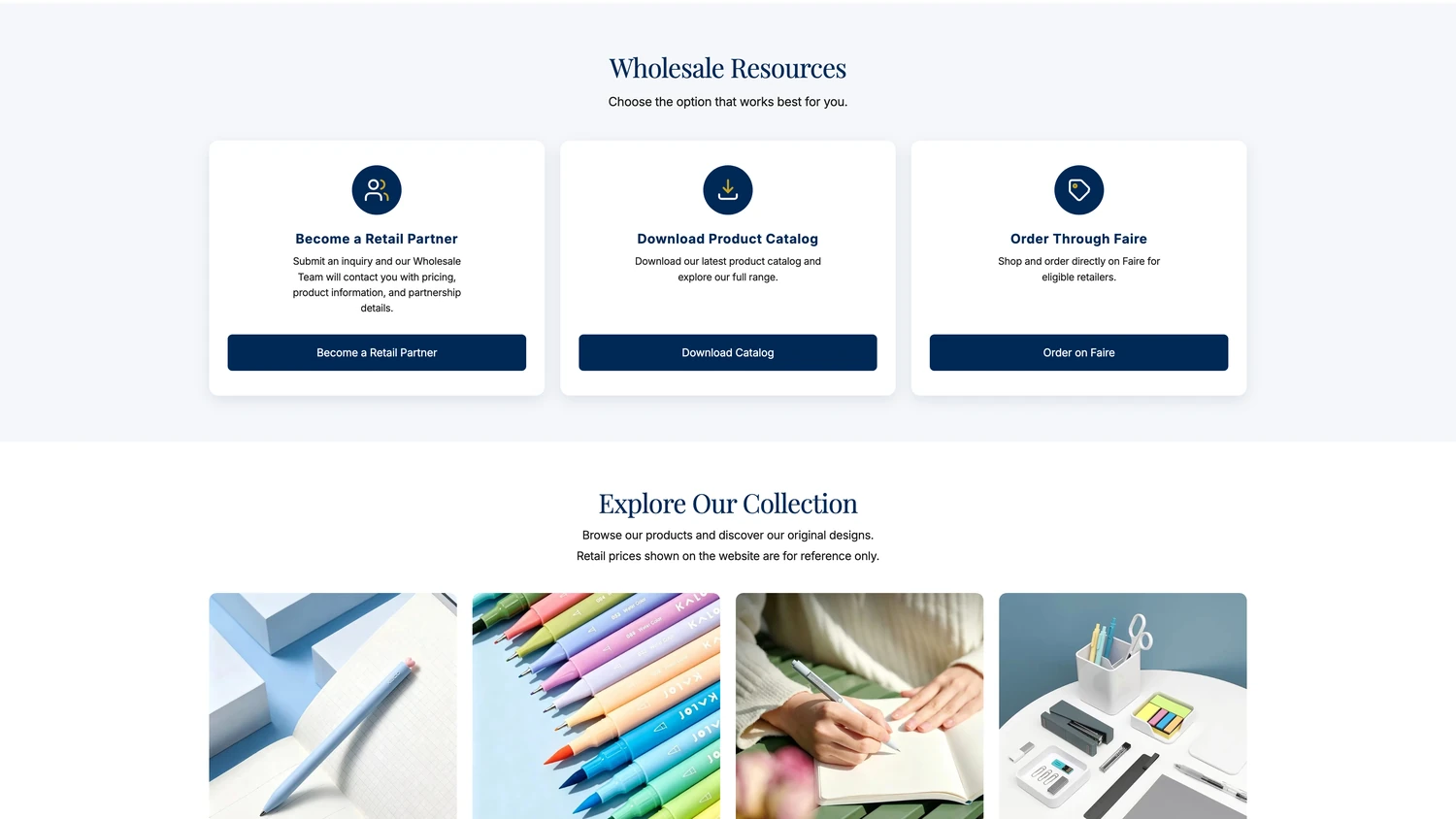
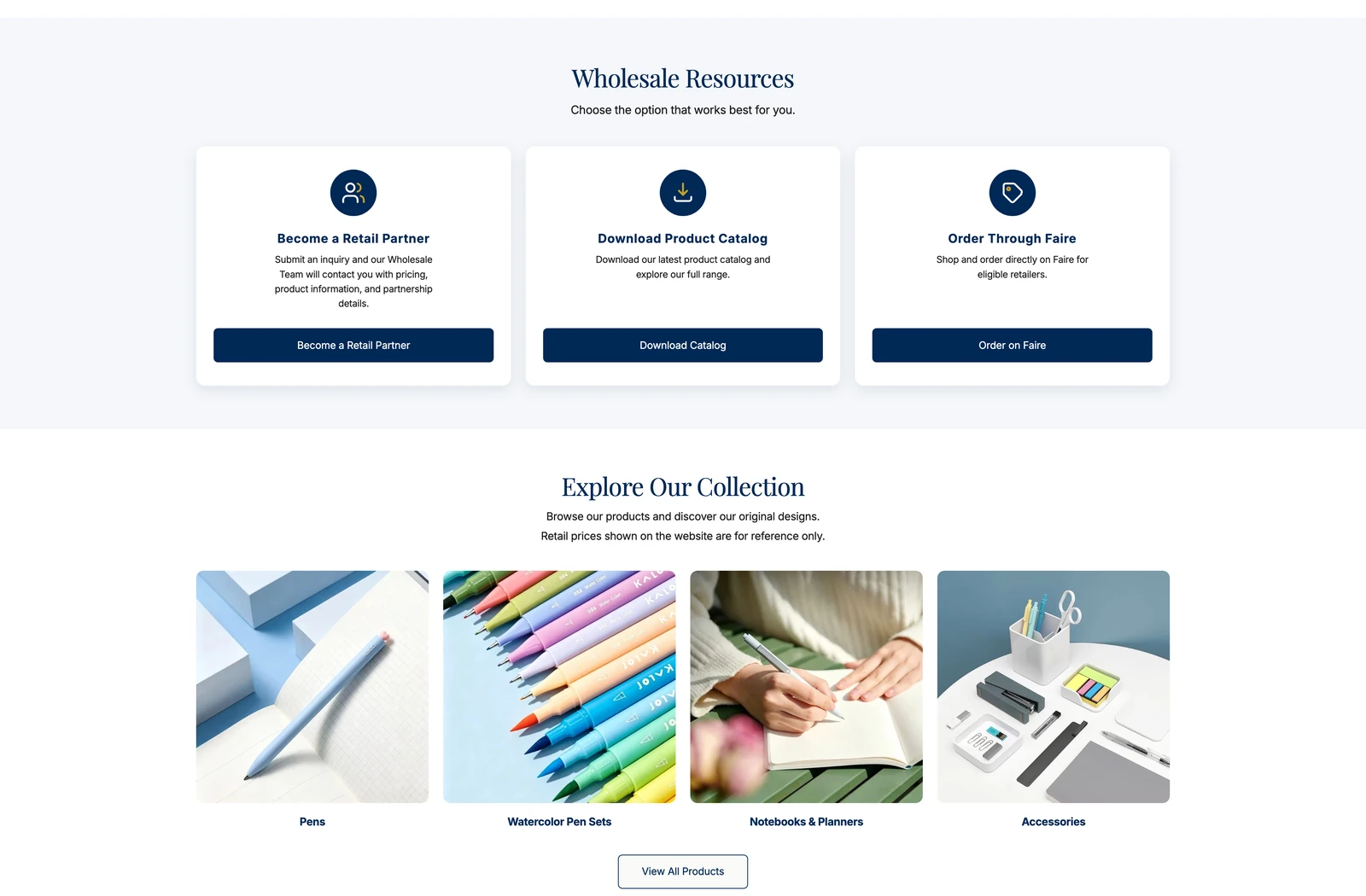
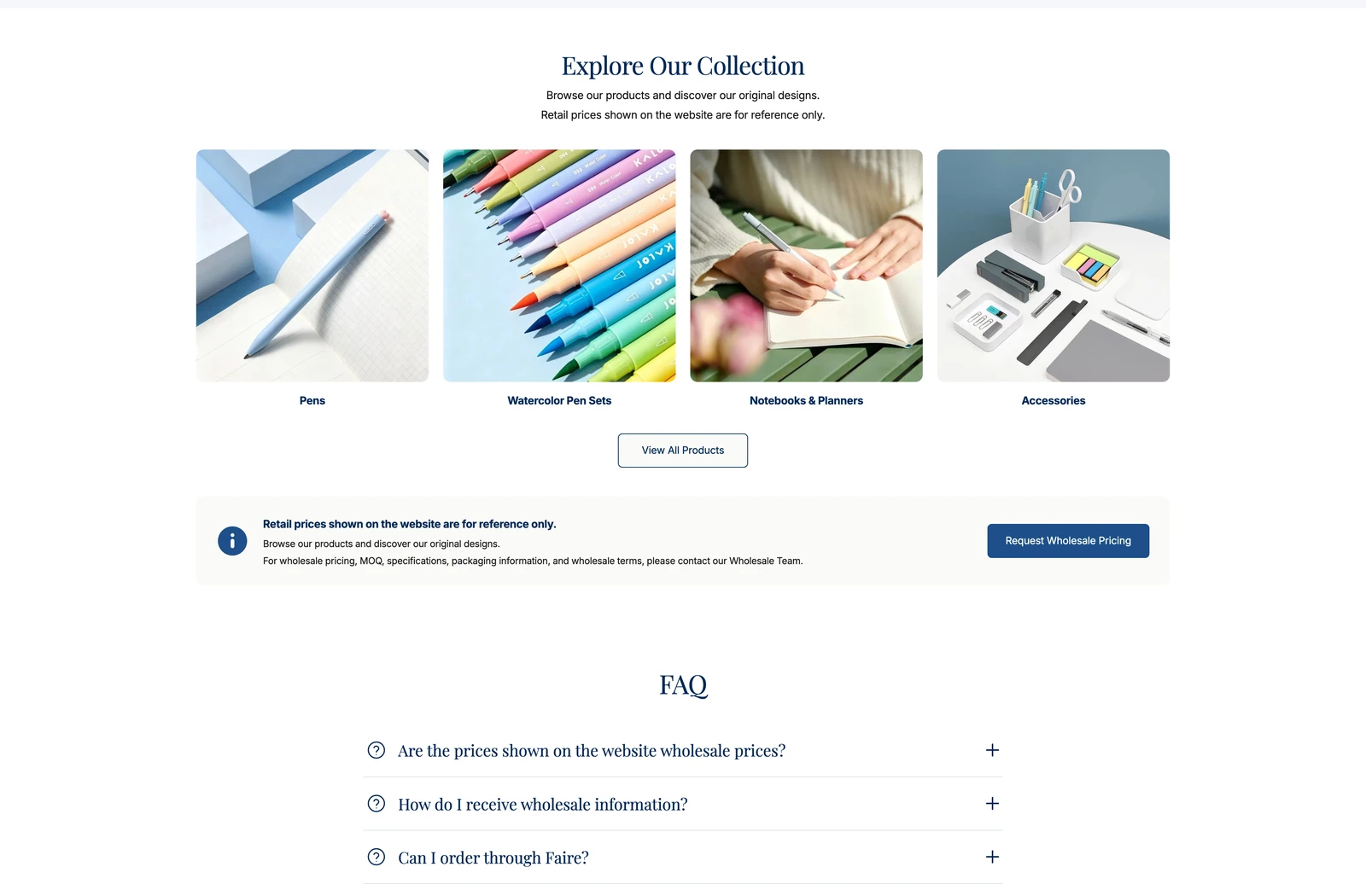
We built the wholesale page as a set of Online Store 2.0 sections — a hero, four partner benefits, three equal wholesale access options, product discovery, and an FAQ — so every heading, paragraph, label, link and image is editable from the admin with no developer involved.
The three wholesale routes are deliberately equal in weight: become a retail partner, download the product catalogue, or order through Faire. No funnel, no ranking, no “recommended” badge — retailers pick the door that suits how they already buy.
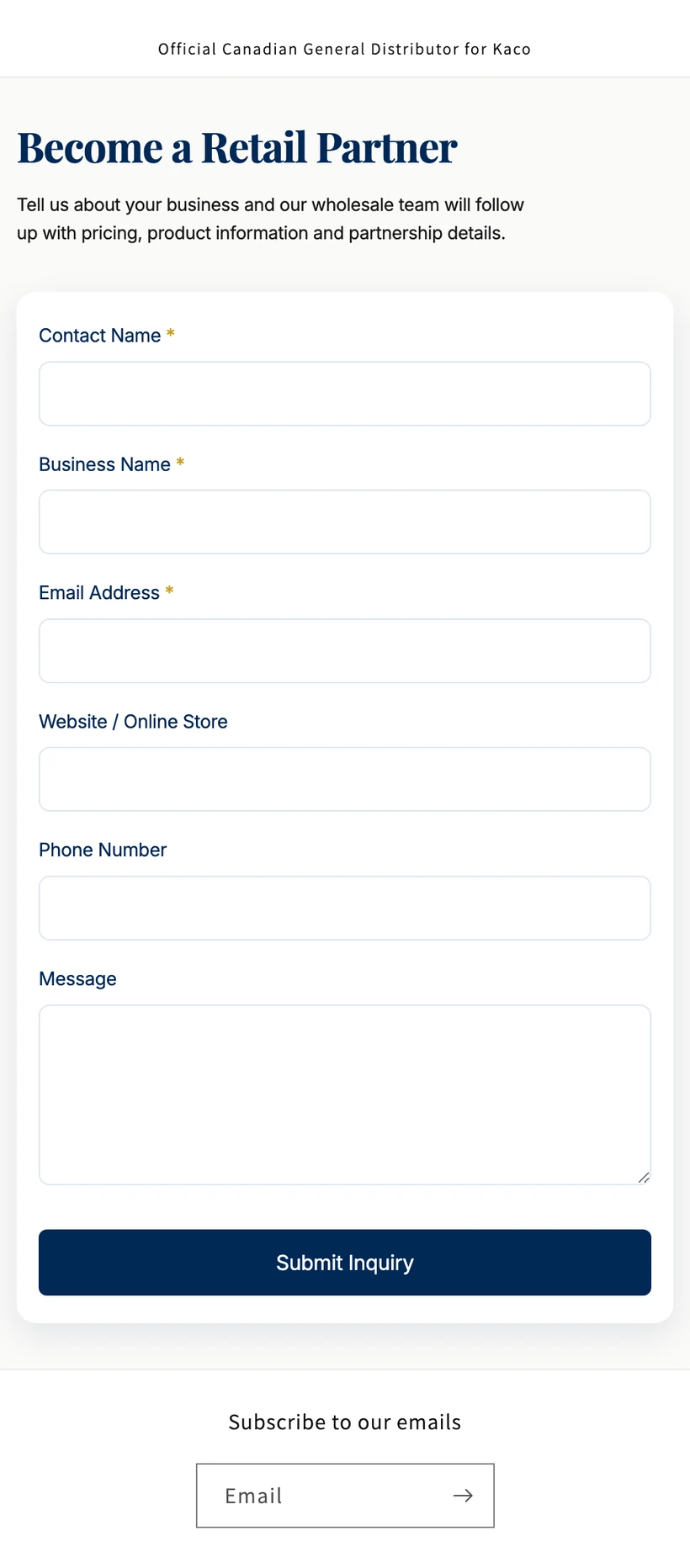
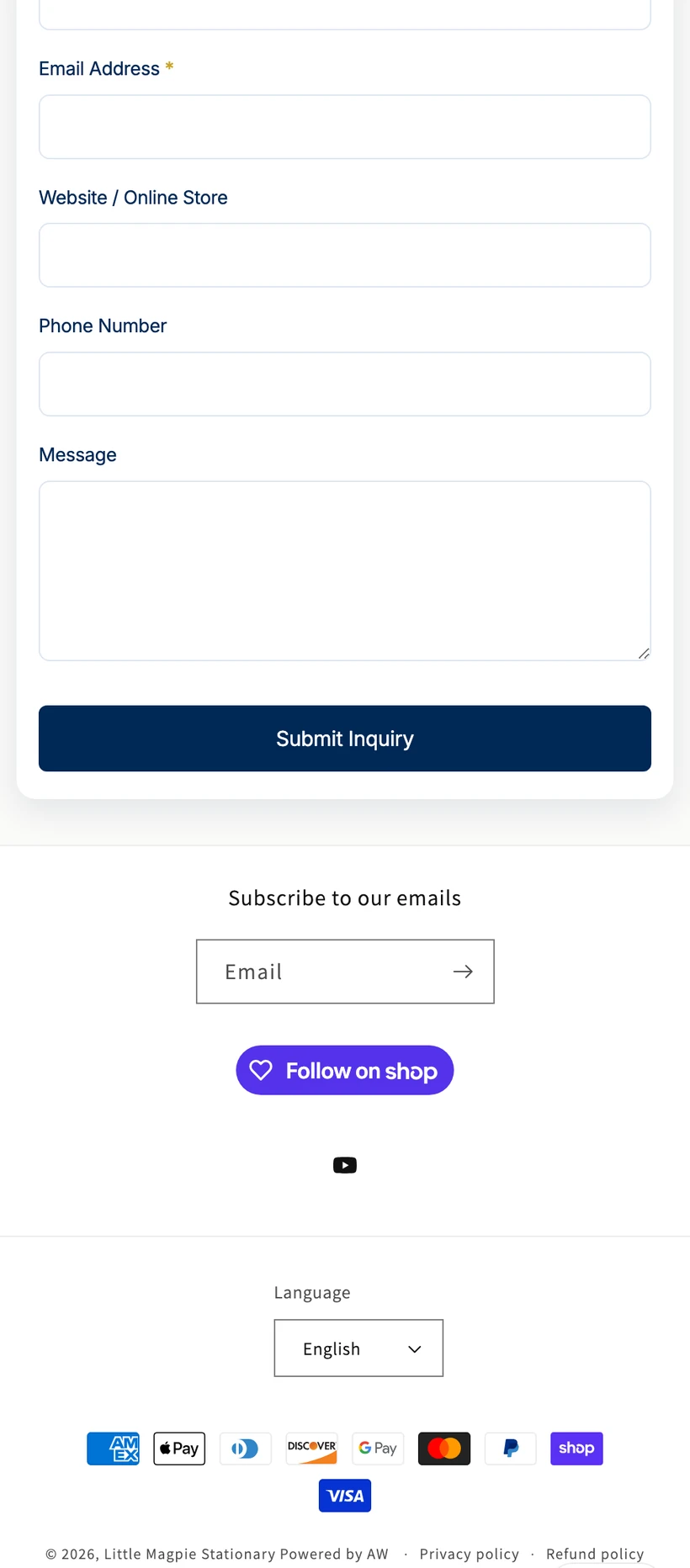
A dedicated inquiry page handles the conversion, built on Shopify’s native form so submissions arrive without a third-party app or monthly fee.
Two Audiences, One Storefront
The hardest part of a wholesale channel isn’t the wholesale page — it’s everything around it. A retailer has to be able to find the door, and a shopper has to never trip over it.
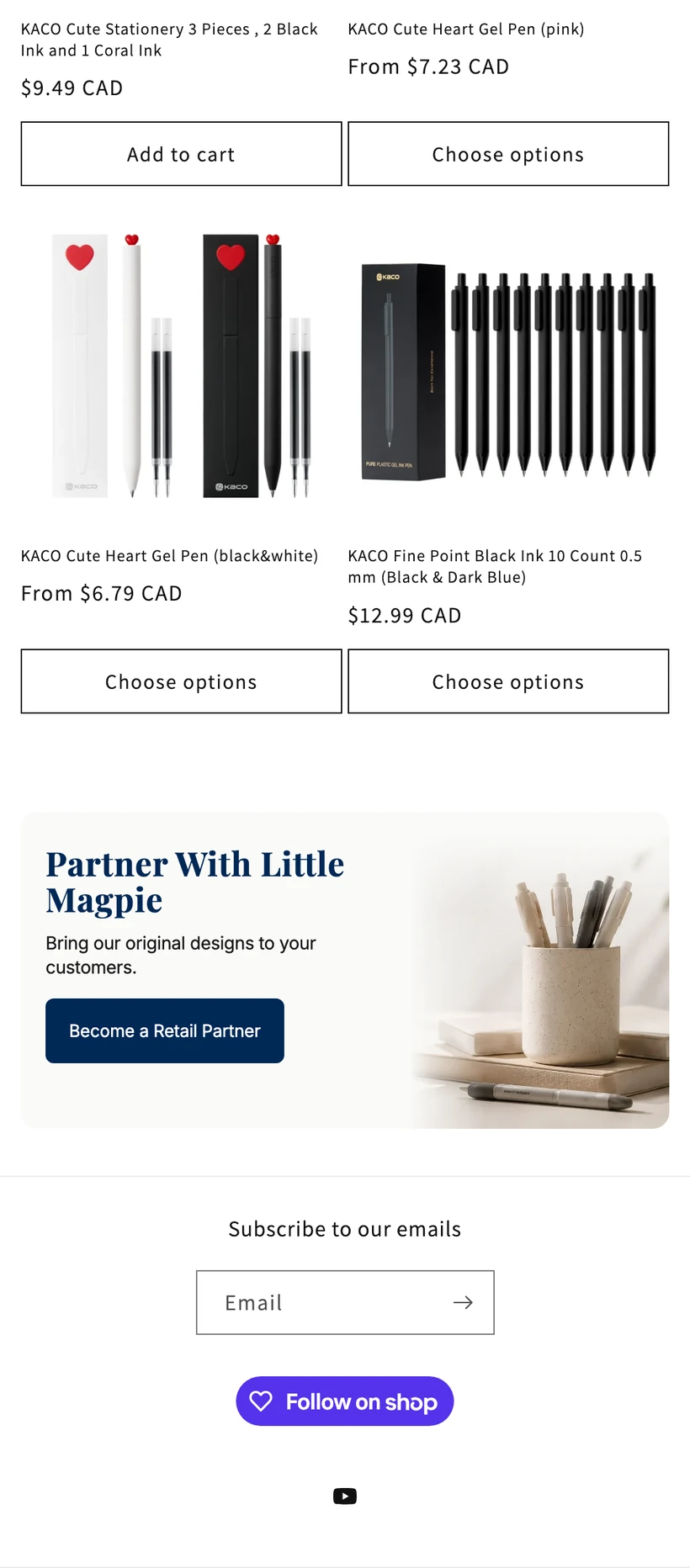
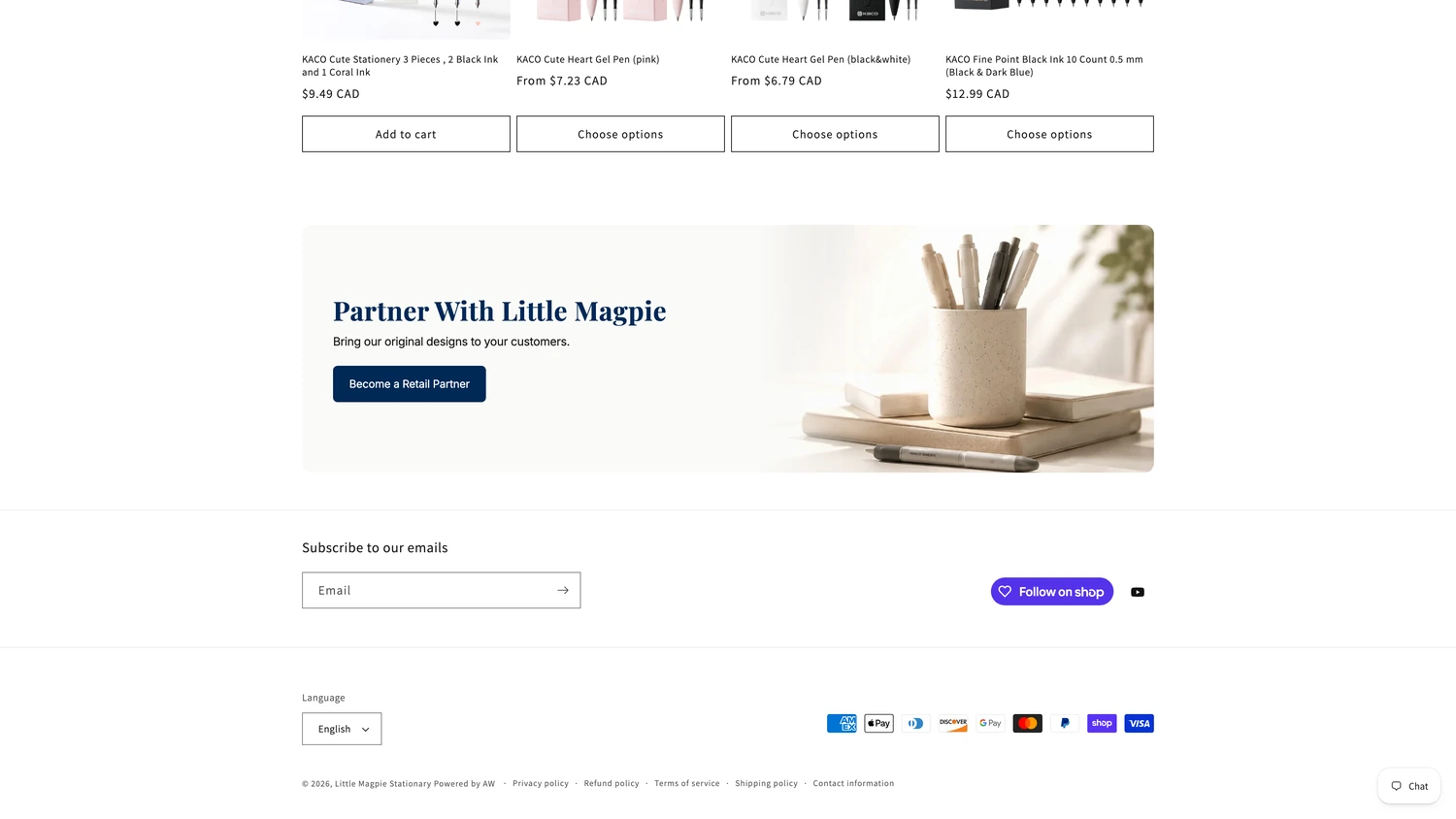
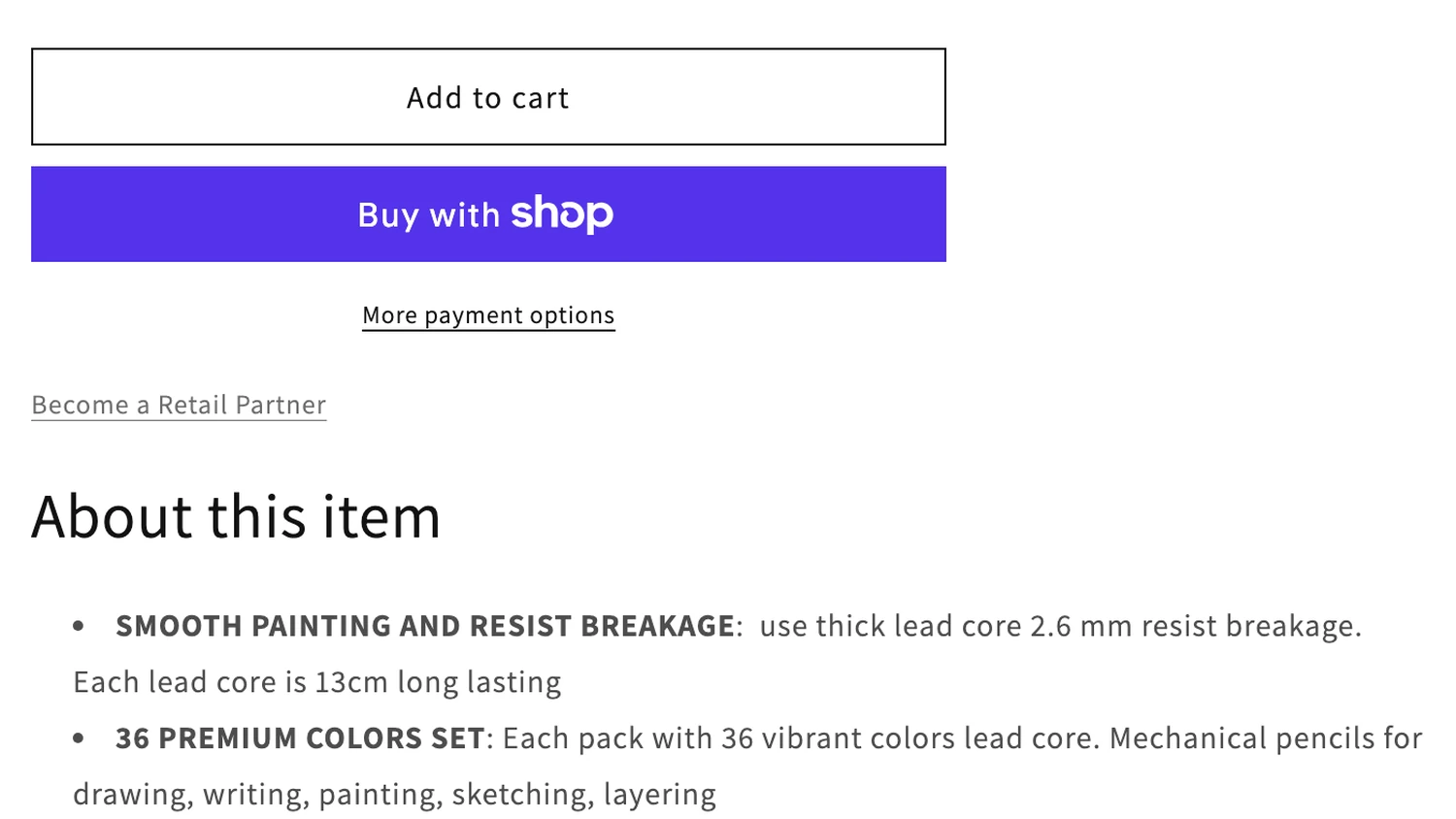
So the retail-side entry points are deliberately quiet: a partnership banner that sits below the product grid once browsing is done, and a small secondary link beneath Add to Cart — never near the price, never between product cards, never dressed up as a promotion.
Both are section-driven and can be switched off globally or hidden on any individual collection, so the balance stays in the client’s hands as the business changes.
Bilingual by Construction, Not by Afterthought
Little Magpie serves customers in English and French, so the wholesale channel had to launch in both — not follow later in a second phase.
Every visible string was built as an editable setting rather than hard-coded markup, which means the entire experience surfaces natively in Shopify’s Translate & Adapt. The French version is content the client owns and edits themselves, not a translation layer we control.
The same discipline applies to the type system: Playfair Display and Inter are loaded and scoped to the wholesale experience alone, so the brand shows up where it should while the retail store keeps its own identity untouched.


Built to Hand Over
A wholesale page is only useful if the team behind it can keep it current. Every heading, benefit, card, FAQ answer, button label, destination and image is a setting in the Shopify admin — including independent text sizes for desktop and mobile.
We built and reviewed the entire experience on a duplicate theme, so the live storefront was never the test environment, and the client could preview and approve each stage before anything reached a customer.
In partners we trust
Shopify
Translate & Adapt
Faire
Dawn
What our client said

"Their Shopify expertise, attention to detail, and proactive approach really set them apart."
Founder, Little Magpie
Our value added
We opened a wholesale channel inside a live retail store — bilingual, fully editable, and built so the consumer experience never noticed.
B2B inside B2C
A wholesale journey layered onto a live retail storefront
Bilingual
English & French, owned and edited by the client
Three equal routes
Inquiry, catalogue or Faire — no forced funnel
No app fees
Native Shopify forms and sections, not paid add-ons
Zero retail disruption
Quiet entry points, scoped styling, untouched storefront
Fully editable
Every string, link and image managed from the admin